
Women's Health Topics
Locations Served
Language
All Services
Additional Resources
Sexual Health & HIV Care
As Sexual Health and HIV Educators, we are dedicated to providing comprehensive, inclusive, and trauma-informed care to our patients and community. Our care is grounded in respectful, patient-centered listening and a commitment to understanding everyone’s unique needs. We work closely with medical and non-medical staff to ensure your experience with MCC is as smooth and efficient as possible.
Sexual Health Education services:
- Birth control counseling
- Sexually transmitted infections (STI) education, testing and treatment
- Family planning education
- Minnesota Family Planning Program (MFPP) insurance assistance
HIV Education services:
- HIV testing and counseling
- Sexually transmitted infections (STI) education, testing and treatment
- Pre-Exposure Prophylaxis (PrEP) and Post-Exposure Prophylaxis (PEP) education and referral
- Education related to safe-sex practices and condom distribution
This page contains information relating to HIV transmission and education. If you have questions, please reach out to:
Molly Ryan, MPH
Manager of Health Education and Risk Reduction Programs
651-746-9728
mryan@mncare.org
Meet Our Team
Sexual Health Educators
Mia McLaughlin
(763) 331-9367
La Clinica
English and Spanish
Kenna Markle
(651) 389-2553
East Side Family Clinic
English
HIV Health Educators
Mario Maldonado
(651)602-7540
La Clinica
English and Spanish
Melissa Rodriguez
(651) 412-8482
La Clinica
English and Spanish
Sexually Transmitted Infections (STI)
Sexually transmitted infections (STI’s) are infections that are primarily spread through sexual contact, including vaginal, anal, and oral sex. They are caused by bacteria, viruses, or parasites which can affect anyone who is sexually active, regardless of age, gender, or background. Common infections include Chlamydia, Gonorrhea, Human Immunodeficiency Virus (HIV), and Herpes Simplex Virus (HSV).
Many STIs may not cause noticeable symptoms at first, which means people can unknowingly pass them to others. When symptoms do occur, they can include unusual discharge, pain during urination, sores, rashes, or flu-like symptoms. If left untreated, some STIs can lead to serious health complications, such as infertility or long-term illness.
The good news is that all STIs are treatable and preventable. Using protection like condoms, getting regular testing, and communicating openly with partners are key steps in reducing risk. Early detection through testing is especially important, because it allows for timely treatment and helps prevent the spread of infection.
Bacterial Infections
Chlamydia
Chlamydia is one of the most common sexually transmitted infections, caused by a type of bacteria. It spreads through vaginal, anal, or oral sex with an infected person. Many people who have chlamydia don’t notice any symptoms, which means it can be passed on without knowing. Chlamydia is easily treated with antibiotics.
When symptoms do appear, they may include unusual discharge, a burning feeling when urinating, or pain in the lower abdomen.
For more information on Chlamydia, visit the U.S. Centers for Disease Control and Prevention website by clicking on the link(s) below.
About Chlamydia (CDC) – English
Acerca de la Clamidia (CDC) – Español
Gonorrhea
Gonorrhea is a common sexually transmitted infection caused by bacteria that is spread through vaginal, anal, or oral sex. It can infect areas such as the genitals, rectum, and throat. Like many STIs, gonorrhea often does not cause noticeable symptoms, especially in the early stages. Gonorrhea is easily treated with antibiotics.
For more information on Gonorrhea, visit the U.S. Centers for Disease Control and Prevention website by clicking on the link(s) below.
About Gonorrhea (CDC) – English
Acerca de la Gonorrea (CDC) – Español
Syphilis
Syphilis is a sexually transmitted infection caused by bacteria. It is primarily spread through direct contact with infectious lesions (chancres) during vaginal, anal, or oral sexual activity. These chancres can develop on genitals or mouth (internally or externally), and are often times small and usually painless, so you might not know it’s there. It can also be transmitted from a pregnant individual to the fetus (congenital syphilis), which can result in severe complications or fetal loss.
Syphilis occurs in a series of stages—primary, secondary, latent, and tertiary. Each stage presents different signs and symptoms, and the infection may become less apparent (latent) before progressing to more severe complications if left untreated. Syphilis is easily treated with antibiotics.
For more information on Syphilis, visit the U.S. Centers for Disease Control and Prevention website by clicking on the link(s) below.
Viral Infections
Human Immunodeficiency Virus (HIV)
HIV is a virus that attacks the body’s immune system, specifically the cells that help fight infections. It is mainly spread through unprotected sexual contact, sharing needles, or from mother to child during pregnancy, birth, or breastfeeding.
Early symptoms may resemble having flu-like symptoms (fever, sore throat, chills). As the disease progresses without treatment, individuals may experience weight loss, chronic diarrhea, persistent fever, and recurrent infections that lead to acquired immunodeficiency syndrome (AIDs).
HIV is an incurable virus. It is managed with antiretroviral therapy (ART), which involves a combination of medications that suppress viral replication. While there is no cure, consistent ART can maintain immune function, reduce viral load to undetectable levels, and prevent transmission.
For more information on HIV, visit the U.S. Centers for Disease Control and Prevention website by clicking on the link(s) below.
Acerca del VIH (CDC) – Español
Human Papillomavirus (HPV)
HPV infections are very common; almost everyone will have an HPV infection at some point in their lives. Non-sexual HPV types are spread through casual skin contact.
HPV is a group of more than 200 related viruses, some of which are transmitted through sexual contact. Certain high-risk types are associated with cancer, while low-risk types can cause benign conditions such as genital warts.
In terms of sexual transmission, HPV is primarily spread through direct skin-to-skin contact during vaginal, anal, or oral sexual activity. It can be spread even when an infected individual has no visible signs or symptoms.
HPV is an incurable virus. Management of the virus focuses on treating associated conditions:
- Removal of warts using topical medications, cryotherapy, or surgical procedures
- Monitoring and treatment of precancerous lesions through routine screening (e.g., Pap tests)
- Vaccination (e.g., Gardasil 9) is highly effective in preventing infection with common high-risk and wart-causing HPV types
For more information on HPV, visit the U.S. Centers for Disease Control and Prevention website by clicking on the link(s) below.
Acerca de la VPH (CDC) – Español
Herpes Simplex Virus (HSV)
HSV is a common viral infection caused by two types of herpes simplex virus: HSV-1 and HSV-2. HSV-1 is most often associated with oral infections (oral herpes), while HSV-2 more commonly causes genital infections (genital herpes), though either type can infect oral or genital areas.
HSV is transmitted through direct contact with infected skin, mucous membranes, or bodily fluids. This includes oral-to-oral (kissing), oral-to-genital, and genital-to-genital contact. **
HSV-1 often causes oral herpes, which can result in cold sores or fever blisters on or around the mouth. However, most people with oral herpes get it during childhood or young adulthood from non-sexual contact with saliva and do not have any symptoms.
HSV-2 is the most common cause of genital herpes. The virus is present on blisters and ulcers in/on the mouth, vagina, or rectum. The virus moves from one person to another during sexual activity.
Transmission can occur even in the absence of visible lesions due to asymptomatic viral shedding. Both HSV-1 and HSV-2 are most contagious when blisters or ulcers are present, while HSV-2 is generally associated with higher rates of transmission and recurrences.
While there is no cure for HSV, antiviral medications are used to reduce the severity of symptoms, shorten outbreak duration, and decrease the risk of spreading it to others.
For more information on HSV, visit the U.S. Centers for Disease Control and Prevention website by clicking on the link(s) below.
About Genital Herpes (CDC) – English
Acerca del Herpes Genital (CDC) – Español
Hepatitis B
Hep B is not considered an STI however, it is spread through sexual contact or by blood-to-blood contact. A vaccine is available to protect against infection.
Hepatitis C
Hep C is not considered an STI however; it is spread by blood-to-blood contact. It is a higher risk for those who are living with the Human Immunodeficiency virus (HIV). A vaccine is available to protect against infection.
Parasitic Infection
Trichomoniasis
Trichomoniasis (“Trich”) is sexually transmitted infection caused by a protozoan parasite. It is one of the most common non-viral sexually transmitted infections worldwide.
The infection is primarily transmitted through vaginal sexual contact. The parasite is spread via genital-to-genital contact, most commonly during unprotected intercourse.
Trichomoniasis is easily treated with oral antimicrobial medications.
Safer Sex
Positive sexual experiences are consensual, respectful, and protected. When we have sex with someone, we show intimate parts of our bodies and emotions. Safe sex means keeping our bodies and emotional health safe. You have the right to say no to sex, stop sexual activity, and tell a partner that you will not have sex without birth control or protection from STIs. If anyone questions your rights to these things, especially a sexual partner, they probably don’t have your best interests in mind.
Personal Safety
Your personal safety is extremely important. Violence can be physical or emotional. Our providers are always available to listen and can be trusted with your confidential information. They can also provide information on where to find help.
When pregnant: Part of a healthy pregnancy and creating space for welcoming your baby is making sure you feel safe in your home and surroundings. Unfortunately, 1 in 4 pregnant women in the USA experiences some type of physical or emotional violence. For many women, this happens for the first time or gets worse during pregnancy.
If you are struggling with feeling safe, you are not alone.
This wheel helps us think about things that other people can do or say that make us feel unsafe. Have you noticed these things in your life?
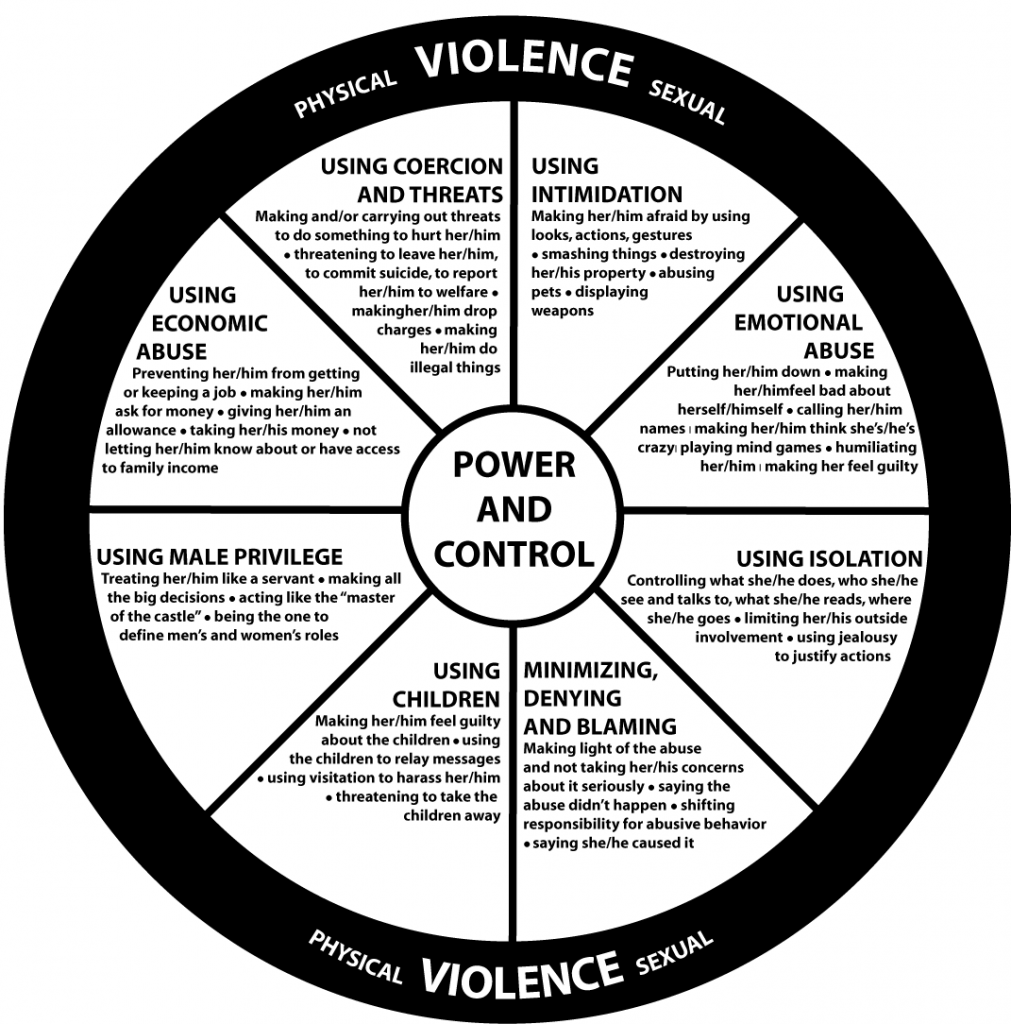
Everyone deserves to be safe. We want to help you find the right resources. If you don’t feel safe in your home or in your relationships, there is help available.
Minnesota Domestic Violence Crisis Line, available 24-hours. 866-223-1111. (For text, use: 612-399-9995)
St. Paul & Ramsey County Intervention Project. (651) 645-2824.
Bridges to Safety is in the Ramsey County Courthouse at St. Paul City Hall, 15 West Kellogg Boulevard, Room 140 St. Paul, MN 55102. (651) 266-9901. They offer help with restraining orders, legal help, and help to find shelter space all in one place. They even have child care if you need it while you are in their office!
Casa de Esperanza. (651) 772-1611. Offers support to women living with domestic violence. Call the crisis line if you need help. It is open 24 hours a day in English and Spanish.
Online Scheduling
Online Scheduling
For new patient appointments, please call (651) 602-7500. Existing patients can schedule their appointments online here
For new patient appointments interested in behavioral/ mental health, please call (651) 793-2226
If you know someone who could benefit from mental health support, we’re here to help. Making a referral is simple:
🔗 Click here to a copy our Referral Form
Our team provides compassionate, evidence-based care tailored to each individual’s needs. Whether you’re a provider, caregiver, or community partner, making a referral is simple. Together, we can connect individuals and families to the care they deserve.
Note: We do not provide any Crisis Care Services. If you or a loved one is in immediate need, please contact your local Emergency Department.
If you have an urgent medical question after business hours, dial (651)-602-7500 for the 24-hour CareLine
For answers to frequently asked questions, visit our MyChart page to Schedule an Appointment page.